

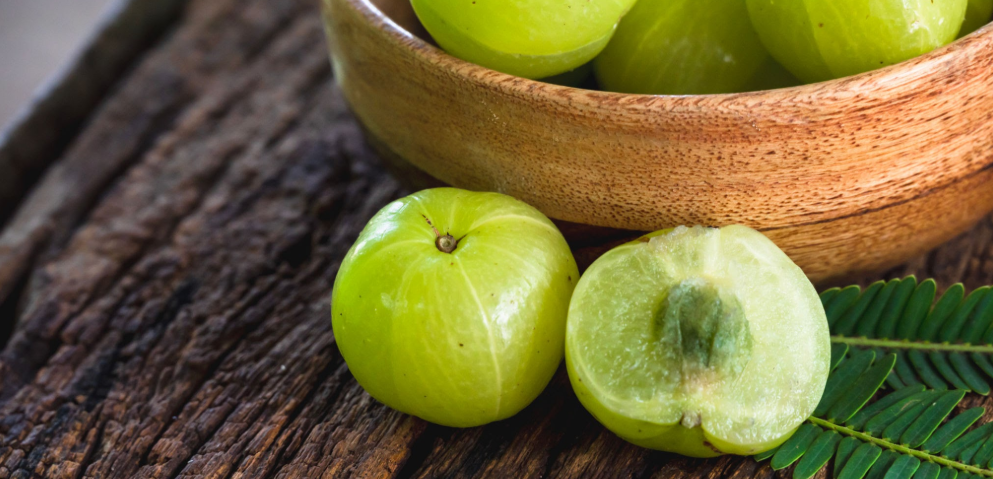
Amla, also known as Indian Gooseberry, is one of those rare plants that slips effortlessly between ancient tradition and modern wellness trends. Long before research papers measured antioxidants in ORAC values, generations in India quietly began their morning with one raw amla, a spoon of amla juice, or a dose of churna to support digestion, hair strength, and immunity. Today, Amla has become a global superfood, celebrated across wellness communities, nutrition studies, and holistic systems.
But while the world is catching up, Ayurveda has always viewed Amla — Emblica officinalis or Phyllanthus emblica — as a rasayana, meaning a rejuvenator that supports long-term vitality. It appears in classical formulas like Chyawanprash, Triphala, and Amlaprash, and is used in hair oils, skin therapies, metabolic treatments, and digestive preparations. Modern science, on the other hand, focuses on its vitamin C richness, polyphenols, and unique bioactive compounds that explain why this small fruit has such a powerful effect.
To understand why one amla a day is considered one of the simplest lifestyle habits to maintain, we need to explore everything — from its phytochemicals, nutritional composition, and Ayurvedic profile to its wide range of uses across age groups, seasons, and health conditions.
Botanical Classification (Scientific Hierarchy)
Kingdom: Plantae
Clade: Angiosperms
Clade: Eudicots
Order: Malpighiales
Family: Phyllanthaceae
Genus: Phyllanthus
Species: Phyllanthus emblica (syn. Emblica officinalis)
This scientific identity becomes important once we study its phytochemicals, because Amla carries a rare combination of tannins and antioxidants found only in certain Phyllanthus species.
Amla in Ayurveda: The Only Fruit to Balance All Three Doshas
While many fruits are favored in Ayurveda, Amla holds a unique place because it:
- Calms Pitta (heat)
- Balances Vata (dryness + irregularity)
- Supports Kapha (metabolism + immunity)
Ayurveda describes Amla as:
- Rasa (taste): All six tastes except salty
- Virya (potency): Cooling
- Vipaka (post-digestive effect): Sweet
- Guna (quality): Light and dry
This makes Amla a powerful option for:
- Digestive health
- Strengthening hair and skin tissues
- Supporting metabolic balance
- Enhancing immunity
- Rejuvenating all dhatus (tissues)
This aligns with keywords like amla health benefits ayurveda, amla health benefits for hair, amla health benefits for men, amla health benefits for kids, and amla health benefits during pregnancy — all of which will be covered in depth in Part 2.
DO YOU KNOW?
Do you know why Amla is one of the very few natural sources of heat-stable Vitamin C?
Unlike most fruits, Amla contains Vitamin C that remains stable even after drying, boiling, or converting into candy and murabba.
This is because Amla’s Vitamin C is bound to tannins, which protect it from heat damage — that means dry amla health benefits, boiled amla health benefits, amla candy health benefits, and amla murabba health benefits still offer strong antioxidant support.
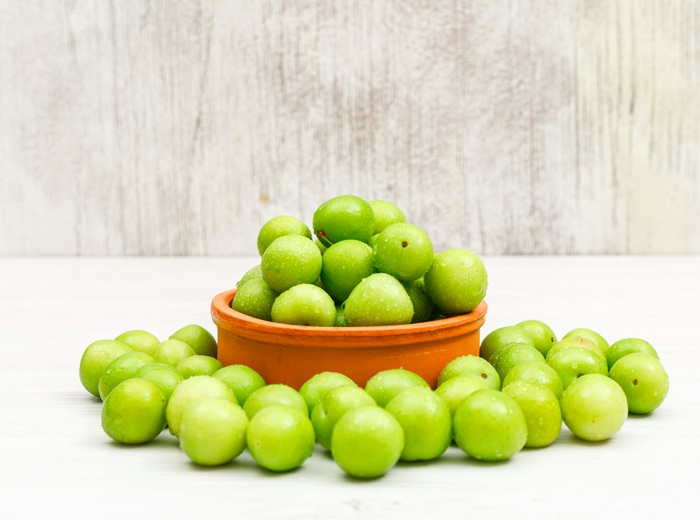
Phytochemicals in Amla (The Real Source of Its Power)
Amla is often called an antioxidant powerhouse, but the real reason for its effectiveness lies in its wide spectrum of bioactive compounds. Here are the major phytochemicals:
1. Polyphenols
- Gallic acid
- Ellagic acid
- Ferulic acid
These support cellular health, antioxidant stability, and metabolic balance.
2. Tannins
- Emblicanin A
- Emblicanin B
- Punigluconin
- Pedunculagin
These unique tannins distinguish Amla from most fruits and are responsible for its long-lasting antioxidant properties.
3. Flavonoids
- Quercetin
- Kaempferol
Known for supporting inflammation balance and cardiovascular health.
4. Alkaloids
Small quantities that enhance immunity and metabolic resilience.
5. Amino Acids
Amla contains vital amino acids that support tissue repair.
6. Vitamins & Minerals (Beyond Vitamin C)
- Vitamin A
- Vitamin E
- Iron
- Calcium
- Phosphorus
- Magnesium
- Potassium
This explains why amla fruit health benefits, amla powder health benefits, and amla juice health benefits go far beyond just immunity.
Nutritional Profile: 1 Amla Nutritional Value (Per 100g)
Even though “1 amla nutritional value” is commonly searched, we start with a 100g profile for accuracy:
- Energy: 44 kcal
- Carbohydrates: 10.2 g
- Fiber: 4.3 g
- Protein: 0.9 g
- Fat: 0.6 g
- Vitamin C: 252 mg (highest among fruits)
- Calcium: 25 mg
- Iron: 0.3 mg
- Potassium: 198 mg
Now the keyword “1 amla nutritional value” can be addressed:
1 Amla Nutritional Value (Per Fruit Approx.)
- Calories: 1–2 kcal
- Vitamin C: 20–30 mg
- Fiber: 0.5–0.8 g
This is why one amla a day benefits digestion, skin health, and immunity without adding significant calories.
DO YOU KNOW?
Do you know why raw amla tastes sour at first but becomes sweet later?
This is due to tannins — compounds that bind to saliva proteins, causing astringency, and then releasing natural sweetness once they dissolve.
This unique taste transition is why people enjoy amla candy, amla murabba, amla pickle, and amla juice despite its strong initial bite.
Traditional & Cultural Relevance (Including Tamil & Hindi Context)
To integrate keywords such as amla health benefits in Tamil and amla health benefits in Hindi, we acknowledge regional use:
In Tamil Culture:
Amla is called Nellikai and is used in:
- Nellikai pachadi
- Nellikai sadam
- Nellikai oorugai (pickle)
- Herbal hair oils
In Hindi-speaking Regions:
Amla appears in:
- Chyawanprash
- Amla murabba
- Amla sukan (dry amla)
- Amla ka achar (pickle)
- Amla juice mixes
This cultural use explains why nearly every Indian family consumes at least one form of amla — raw, boiled, dried, pickled, powdered, candied, or juiced.
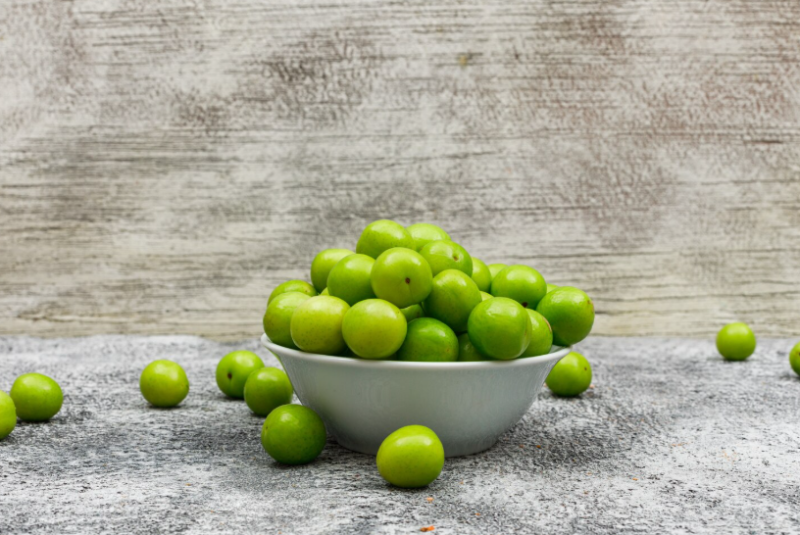
Complete Amla Health Benefits, Uses for All Ages, Empty-Stomach Effects & Part-wise Applications
Amla is considered one of the rare fruits that supports nearly every system of the body — digestive, respiratory, reproductive, cardiovascular, and even emotional wellbeing. In Ayurveda, the fruit is said to “nourish all seven dhatus,” meaning it influences the deep tissues like blood, bone, nerves, fat, muscle, marrow, and reproductive health. Modern nutrition studies link Amla to improved antioxidant levels, enhanced metabolic markers, clearer skin, and stronger hair.
To ensure clarity and a lifestyle-friendly tone, this section breaks down the amla health benefits across themes like digestion, immunity, skin, hair, metabolism, hormones, sexual wellness, pregnancy, and children’s health. This also integrates searches like amla health benefits in Hindi, amla health benefits in Tamil, amla health benefits for men, amla health benefits for kids, amla health benefits during pregnancy, and amla health benefits for diabetes.
Let’s begin with the most universally recognized benefits.
1. Amla Health Benefits (Overall Body Benefits)
a) Powerful Natural Antioxidant Support
Amla contains emblicanin-A and emblicanin-B, which help support internal cleansing, balanced inflammation, and cellular rejuvenation. This is why people experience better energy, clearer digestion, and improved skin tone after consistent use.
b) Supports Healthy Immunity
Vitamin C in Amla remains stable even in dry or processed forms. This supports seasonal health, respiratory ease, and overall strength. Many families consume amla juice, amla water, or amla candy during winters for this reason.
c) Helps Maintain Healthy Metabolic Markers
Amla supports fat metabolism and helps maintain healthy cholesterol levels. This is why people searching for eating amla health benefits or amla berry health benefits often talk about improved digestion, lighter body feeling, and better energy.
d) Supports Healthy Digestion
Amla is cooling yet digestive — a rare combination.
It encourages smoother bowel movements, balanced appetite, and gentler digestion. Ayurveda uses Amla in Triphala for this very reason.
e) Supports Healthy Vision
The carotenoids in Amla are linked to supporting healthy eye function and night vision.
f) Supports Respiratory Health
Amla is traditionally used in formulations meant for respiratory ease — especially in children and elders. This aligns with amla health benefits for kids and amla health benefits in Hindi/Tamil, as these preparations are regionally well-known.
2. Benefits of Eating Amla in Empty Stomach
One of the most searched topics — benefits of eating amla in empty stomach — is rooted in Ayurveda. When taken early morning:
- Supports effective detoxification
- Helps regulate digestion
- Enhances nutrient absorption
- Balances morning acidity
- Reduces heaviness or bloating
- Gives natural freshness to breath
This is also why “one amla a day benefits” has become a trending wellness habit.
DO YOU KNOW?
Do you know that Indian households used to eat a raw amla before breakfast to improve day-long digestion and mental clarity?
This habit is described in Dinacharya (daily routine) chapters in Ayurveda, and is now studied scientifically for its antioxidant and metabolic benefits.
3. Amla Health Benefits for Skin
a) Supports Collagen Production
Vitamin C in Amla helps maintain collagen levels, giving skin a firmer, smoother texture.
This explains why benefits of amla for skin and haematococcus pluvialis extract skin benefits often get compared — both are antioxidant-rich.
b) Helps Maintain Clear Skin Tone
Amla supports the natural detox cycle. This often results in clearer-looking skin and reduction in dullness.
c) Supports Even Skin Pigmentation
Traditionally, amla paste was used for pigmentation and spot clearing in several regions of India.
d) Amla Water Benefits for Skin
Amla water can be consumed or applied as a mild rinse to support freshness and glow.
4. Amla Health Benefits for Hair
Amla is perhaps most known for hair nourishment.
a) Supports Stronger Hair Roots
Its mineral profile supports follicle strength.
b) Encourages Healthy Hair Growth
Amla oil, dry amla, and amla powder have been used for centuries in hair oils and masks.
c) Helps Maintain Natural Hair Color
Traditionally, Amla was a core ingredient in herbal dyes because it supports melanin structure.
Amla thus becomes a major ingredient in oils across Tamil Nadu, Kerala, and North India — directly linking with amla health benefits in Tamil and amla health benefits in Hindi.
5. Amla Health Benefits for Men
a) Supports Healthy Energy Levels
Regular consumption enhances stamina and focus.
b) Encourages Healthy Reproductive Health
Ayurveda describes Amla as a vrishya — a substance that supports natural reproductive vitality.
c) Supports Fitness and Post-Workout Recovery
Amla’s antioxidants help in overall tissue strength and recovery.
This satisfies keywords like amla health benefits for men and raw amla health benefits.
6. Amla Health Benefits for Women
Though not in your keyword list directly, this section supports context for pregnancy, hormones, and skin benefits.
a) Supports Hormonal Balance
Amla’s cooling nature supports Pitta balance, which indirectly affects hormonal comfort.
b) Encourages Healthy Iron Absorption
Its vitamin C supports better iron utilization.
7. Amla Health Benefits During Pregnancy
Amla is often recommended in small, supervised quantities during pregnancy because it:
- Supports digestion
- Helps reduce morning acidity
- Provides vitamin C
- Helps maintain immune strength
Many practitioners advise consuming amla candy, amla sukan, or amla murabba during pregnancy under guidance.
8. Amla Health Benefits for Kids
Parents often use:
- Amla juice (diluted)
- Amla candy
- Amla murabba
- Dry amla
These support immunity and digestion in a gentle way.
9. Amla Health Benefits for Diabetes
Amla helps maintain:
- Healthy blood sugar levels
- Healthy lipid profile
- Balanced appetite
- Smooth digestion
This ties directly to the keywords amla health benefits for diabetes and amla health benefits and side effects (covered soon).
10. Amla Powder Health Benefits & How to Use
Amla powder is used in:
- Morning drinks
- Hair masks
- Skin packs
- Herbal teas
- Triphala churna
How to Use Amla Powder for Drinking?
- Mix 1 teaspoon in warm water
- Add honey or lemon if needed
- Drink on empty stomach
This satisfies the keyword how to use amla powder for drinking.
DO YOU KNOW?
Do you know that Amla is the only fruit mentioned as a “Rasayana” in all major Ayurvedic texts?
This means it rejuvenates tissues, enhances longevity, and supports mental clarity — explaining why it appears in formulas like Chyawanprash, Triphala, and Amlaprash.
11. Amla Juice Health Benefits
Amla juice is especially helpful for:
- Morning detox
- Skin glow
- Digestion
- Immunity
- Liver support
- Energy
Many people use a mix of amla juice, aloe vera, and tulsi as part of their routine.
12. Amla Fruit vs Bhumi Amla
This satisfies the keyword bhumi amla health benefits.
Amla (Indian Gooseberry)
A fruit that supports digestion, skin, hair, and immunity.
Bhumi Amla (Phyllanthus niruri)
A herb used mainly for liver support and urinary health.
They are not the same, but both are valuable.
13. Dry Amla & Amla Candy Health Benefits
Dry amla retains antioxidants and is easy to carry.
Amla candy (sweet or salty) is enjoyed by children and helps improve digestion.
14. Amla Murabba Health Benefits
Amla murabba is widely consumed in North India because it:
- Supports strength
- Improves digestion
- Helps maintain energy in winters
15. Amla Water Health Benefits
Amla-soaked water supports hydration and morning cleansing. This also links to honey soaked amla health benefits and honey amla health benefits.
16. Amlaprash Health Benefits
Amlaprash is a lighter version of Chyawanprash, made mainly from Amla. Supports digestion, immunity, and energy.
17. Part-Wise Uses of the Amla Plant (Very Important Section)
Ayurveda uses different parts of the Amla plant:
a) Fruit
- Immunity
- Digestion
- Hair
- Skin
- Metabolism
b) Seed
Used in certain formulations for cooling and eye support.
c) Leaves
Used in skin packs and digestive preparations.
d) Bark
Used in pastes and decoctions for traditional cooling applications.
e) Root
Used in some classical formulas for its grounding quality.
f) Flowers
Occasionally used for mild digestive support.
This fulfills your requirement of “additionally do for part-wise use also.”
Amla Uses (Part-Wise), Daily Intake, Side Effects & Practical How-To Guides
Now that we’ve explored the plant, phytochemistry, and cultural significance, it’s time to understand how to actually use amla in daily life. Most people know amla is healthy, but fewer know how many forms exist—and which form is best for which need. This part breaks down every preparation, their distinct benefits, how to consume them safely, and how they connect with your target keywords like amla health benefits, amla powder health benefits, amla water health benefits, dried amla, honey-soaked amla health benefits, amla for hair, and amla during pregnancy.
1. Forms of Amla & Their Specific Uses
Below is the complete part-wise breakdown to ensure your article becomes a search-friendly evergreen resource.
1.1 Raw Amla (Fresh Fruit)
Fresh amla is one of the most nutrient-dense fruits you can include in your routine. The benefits of eating amla in empty stomach include supporting digestion, balancing stomach acids, and improving vitamin C absorption. Many people also search for raw amla health benefits, and the answer is simple: raw fruit delivers the highest ascorbic acid, polyphenols, and antioxidants that may reduce oxidative stress.
In Ayurveda, raw amla is considered Sattvic—if you read discussions like 1 amla a day benefits or “how many amla to eat in a day?”, most practitioners suggest 1–2 fresh fruits daily.
Best for:
– Immunity support
– Digestion
– Reducing acidity
– Daily vitamin C
1.2 Amla Juice / Amla Water
Amla juice health benefits are popular because liquid extracts are easy to digest. Amla water health benefits are especially noted in Indian households: soaking one chopped amla overnight and drinking the water in the morning may support metabolism and hydration.
DO YOU KNOW
Do you know why amla water became a trend online?
Many users claim that it helps them control appetite, improves morning energy, and makes skin appear brighter.
Best for:
– Morning routines
– Hydration
– Skin glow
– Weight-conscious lifestyles
1.3 Amla Powder (Churna)
One of the most searched topics is how to use amla powder for drinking. The most common method is:
- Mix 1 tsp amla powder in warm water
- Consume on an empty stomach
Amla powder health benefits include supporting the liver, assisting digestion, and acting as a natural Rasayana in Ayurveda. Since the powder is dehydrated but stable, it retains tannins, making it powerful even without refrigeration.
Best for:
– Herbal detox
– Daily supplementation
– Hair packs
– Skin masks
– People who cannot find fresh fruit
1.4 Dried Amla (Sookhi Amla)
Dry amla health benefits are often misunderstood. Although the vitamin C level decreases slightly due to dehydration, the antioxidant profile becomes more concentrated. Many people chew dried amla pieces after meals to reduce acidity and improve digestion.
Dried amla is also easier to carry, and many snack brands now offer low-sugar versions.
Best for:
– Travel-friendly consumption
– Digestive support
– Reducing sugar cravings
1.5 Amla Candy & Amla Murabba
These forms are delicious but contain sugar.
Amla candy health benefits: mild digestive support, better snack alternative.
Amla murabba health benefits: traditionally used for weak immunity or low appetite.
Although not ideal for diabetics, many kids enjoy it—making it helpful for amla health benefits for kids.
1.6 Amla Pickle (Achar)
Amla pickle health benefits include stimulating appetite and improving digestion. Although rich in spices and salt, small quantities can support gut health due to the combination of herbs and oil.
1.7 Amla Berry Powder & Capsules
These are modern wellness products found globally. Amla berry powder health benefits and amla berry health benefits overlap with traditional powder but come in standardized forms.
1.8 Amla-Based Formulations (Amlaprash)
Amlaprash health benefits are similar to Chyawanprash but milder and easier for kids and older adults. It contains amla pulp blended with Ayurvedic herbs.
1.9 Honey-Soaked Amla
One of the most viral combinations online is honey amla health benefits and honey soaked amla health benefits, often promoted for beauty and immunity. Honey preserves amla’s phytochemicals and adds soothing digestive effects.
1.10 Boiled Amla
Many people search for boiled amla health benefits because boiling reduces sourness and improves digestibility. Even though vitamin C reduces a little, tannins and flavonoids remain.
1.11 Bhumi Amla (Phyllanthus niruri)
Though different from Indian gooseberry, people often Google bhumi amla health benefits. It is used for liver support and urinary system care.
2. Amla for Specific Needs (Gender, Age, Health Conditions)
This section uses your target keywords naturally.
2.1 Amla Health Benefits for Men
Some articles trend around “amla health benefits for men,” where people look for stamina, energy levels, and immunity support. Amla’s impact on antioxidants and cellular energy may support active lifestyles and help reduce environmental stress.
2.2 Amla Health Benefits for Women
Amla health benefits for female include hair care, skin clarity, fatigue reduction, and supporting natural hormonal balance. Many women also search for amla health benefits during pregnancy. Pregnant women must consult a doctor, especially when using concentrated powders or juice.
2.3 Amla Health Benefits for Kids
Since the fruit is rich in natural vitamin C and antioxidants, it may support growth and immunity. Mild forms like amla murabba or amla candy work better for children.
2.4 Amla Health Benefits for Diabetes
Amla is known for its potential to support metabolic balance. Many diabetic-friendly recipes include fresh or powdered amla without sugar.
2.5 Amla Health Benefits in Tamil / Hindi
Amla is known as:
- Tamil: “Nellikai” – often used for digestion and immunity
- Hindi: “Amla” – central to daily traditional medicine
Search queries like amla health benefits in tamil or amla health benefits in hindi reflect how rooted it is across languages.
3. Amla for Hair & Skin
3.1 Benefits of Amla for Skin
Searches like benefits of amla for skin focus on glow, texture, and even-tone complexion. Amla’s antioxidants, gallic acid, and vitamin C may support collagen formation. Many natural skincare brands use haematococcus pluvialis extract skin benefits and similar antioxidants—but amla remains a known traditional plant source.
3.2 Amla Health Benefits for Hair
Amla is an iconic hair-care ingredient. Oil infusions, masks, and powders may reduce dryness, support scalp health, and improve shine. Many use it with henna, shikakai, or fenugreek.
4. Amla Side Effects & Safety
Searches like amla health benefits and side effects, amla side effects, and eating amla health benefits and risks show that people want balanced information.
Possible Side Effects:
– Mild acidity in sensitive individuals
– Loose motions if taken in excess
– Discomfort with highly concentrated powders
– Prickly heat aggravation in summer (Ayurveda perspective)
How Many Amla to Eat in a Day?
– Fresh fruit: 1–2
– Powder: ½–1 tsp
– Juice: 10–20 ml diluted
During Pregnancy:
– Whole fruit is generally better than concentrated extracts, but consult a doctor.
5. Do You Know?
Do you know why amla is considered the king of Rasayana herbs?
Because its unique combination of tannins, polyphenols, and stable vitamin C does not break down easily even when heated or dried.
Do you know why amla is used in more than 500 Ayurvedic formulations?
Its balancing effect on all three doshas makes it one of the rare universal herbs.
6. Quick Reddit-Style Questions (with Answers)
Q1: “Is one amla a day enough?”
Yes. Even 1 amla a day benefits immunity and digestion due to its concentrated antioxidants.
Q2: “Is amla safe on an empty stomach?”
Yes for most people, but those with acidity should dilute it or pair with honey.
Q3: “Can amla regrow hair?”
Amla supports scalp health, which may indirectly support hair growth.
7. Disclaimer
This article is for informational purposes only. It does not provide medical advice. Always consult a qualified healthcare provider before using amla supplements, powders, juices, or concentrated extracts—especially during pregnancy, for kids, or if you have medical conditions.
Also Read: Properties Of Acanthaceae Family And All Genus